Serpent fantasy / IMAGINED 1960s
The Curse of the Naga
The serpent remembers what the kingdom forgot.
 By Evelyn ChambersA speculative close reading · 2 min read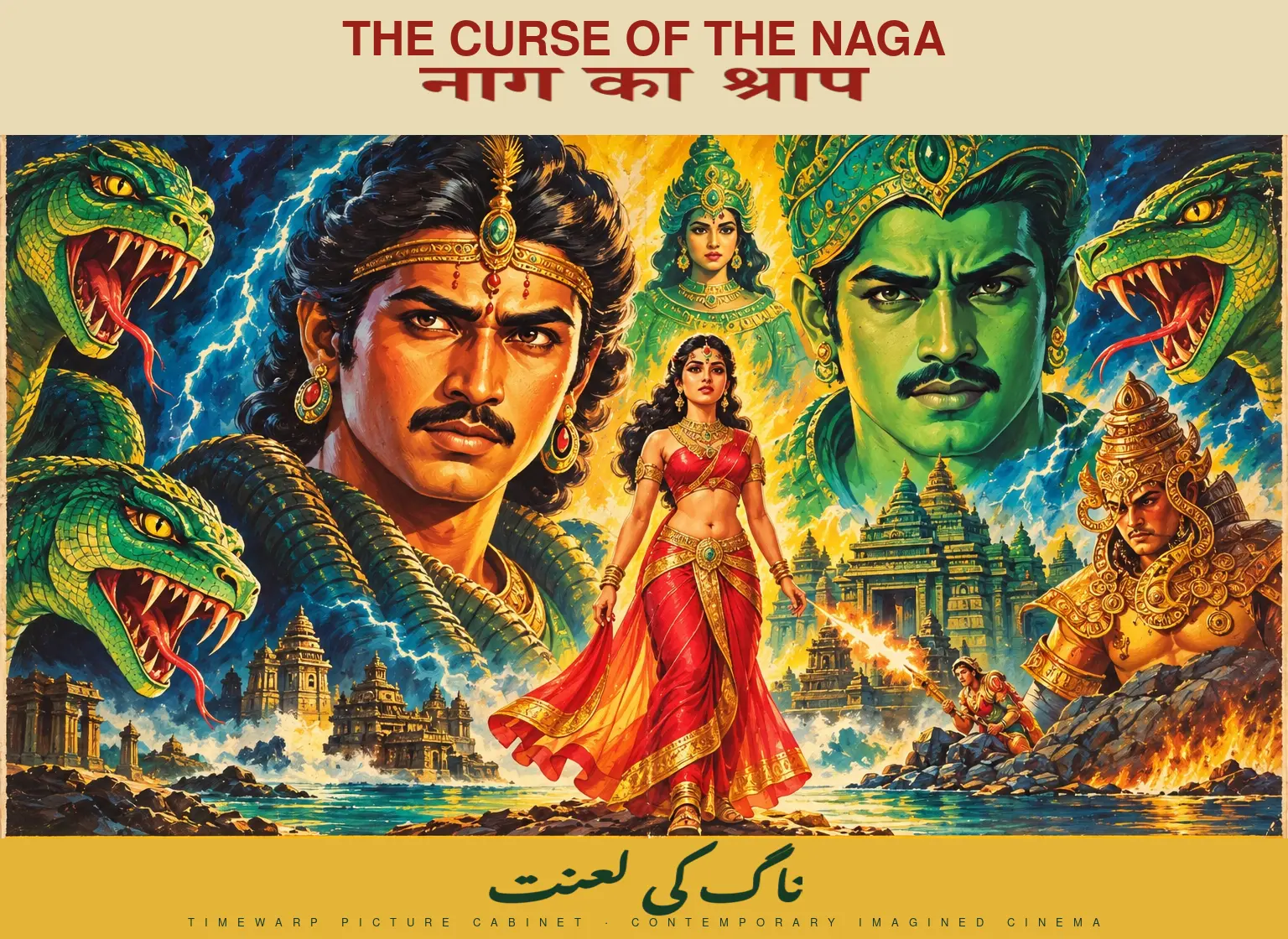
Evelyn Chambers enters a palace where the weather is personal, the jewellery has an agenda and the monster may be the only character telling the truth.
A promise with teeth
A kingdom has grown prosperous by diverting a river. Beneath the abandoned riverbed, something has continued to remember. That is the deliciously simple bargain at the heart of The Curse of the Naga: an ecological debt staged as a family embarrassment, with enough thunder to make denial impractical.
The court calls the serpent a monster. The serpent calls the court by its full name. Our heroine, Leela, suspects that the second description is more informative. As the palace prepares a celebration of its own good fortune, she follows a thread of green light into its foundations.
Not every glittering thing is innocent
In this imagined production, costume does much of the arguing. The king’s ornaments become heavier as his explanations become lighter. Leela’s red sari moves through green chambers like a question that will not be politely withdrawn. Even the decorative snakes seem to be listening.
The central dance is not a battle or a seduction but a negotiation. Leela repeats the old oath, changes one word, and waits. The Naga recognises the difference. For once, a screenplay allows a heroine to defeat a supernatural emergency by paying very close attention to what everyone has actually said.
Let the river have the last word
A lesser fantasy might end with the serpent vanquished and the palace reassured. The ending we imagine is stranger and kinder: water returns to the empty channel, the throne room acquires a damp patch, and the king must attend the ceremony without his favourite floor.
The curse was never a failure of magic. It was a failure of memory. That distinction gives the film its bite—and leaves the audience with the agreeable suspicion that the serpent has been the responsible adult all along.
New speculative essay inspired by a title, byline and generated poster retained from the original site. The film, characters and scenes described here are invented.
How to read the Timewarp ↗